It wasn’t long ago that we were first introduced to ChatGPT a chatbot that could talk like us, think (almost) like us, and help us write, plan, or learn something new. It was exciting and undeniably powerful.
But that was just the beginning.
Today, AI is taking its next big leap from conversation to action.
Meet Figure 03, powered by Helix, a humanoid robot capable of real world movement and decision-making. It’s the moment when AI stops being something that lives behind a screen and starts becoming part of our physical world.
From ChatGPT to Helix — The Evolution of AI

When ChatGPT launched, it changed how we interacted with technology. We moved from typing commands into Google to having genuine conversations with machines. AI became a creative partner, a personal assistant, and for many a great therpaist.
Now, we’ve entered the next phase: AI that doesn’t just think but also acts.
Helix, the new model developed by Figure AI, combines three powerful capabilities:
- Vision – It can see and interpret the world around it.
- Language – It understands and communicates naturally with humans.
- Action – It takes physical steps to complete tasks.
This is known as a Vision-Language-Action model, or VLA, and it’s what makes humanoid robots like Figure 03 so groundbreaking.
They can pick up unseen objects, navigate changing environments, and learn through experience, not just pre-programming. (Crazy right!)
What These Robots Can Actually Do

Helix-powered humanoid robots are being trained to handle real-life situations — in homes, restaurants, and even hotels.
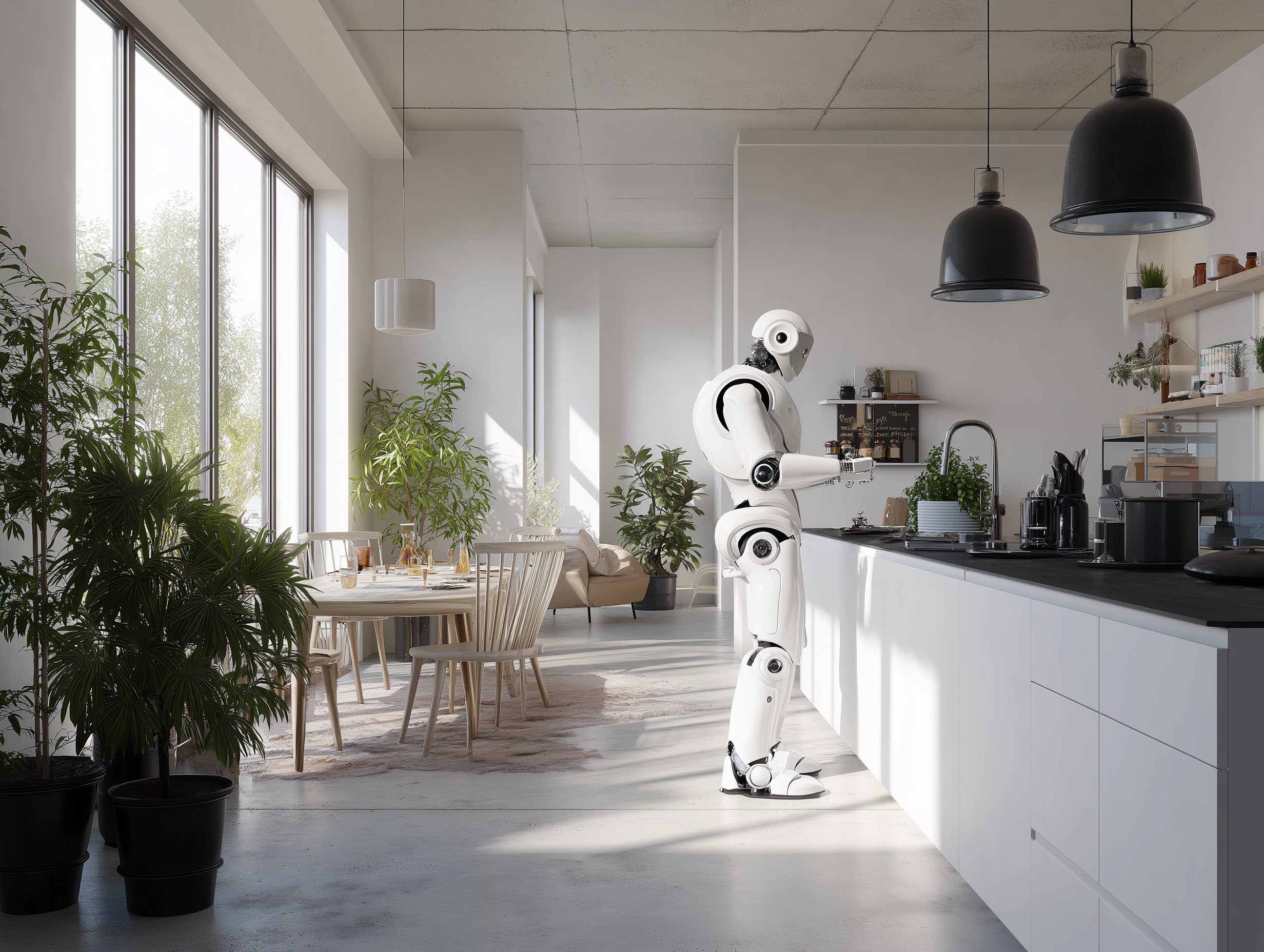
Imagine this: At home, it tidies up, folds laundry, and loads the dishwasher.
Unlike older machines that rely on strict scripts, Helix learns by observing, adapting, and communicating more like a human than a program.
That’s what makes it so transformative.
For the first time, AI isn’t just smart it’s situationally aware. It can connect the dots between what it sees, hears, and understands, then respond with physical action.
The Technology Making It Possible

Behind the scenes, this leap is powered by massive advances in:
- Computer vision – allowing robots to see and understand 3D environments
- Natural language processing (NLP) – enabling two way conversation
- Machine learning – letting systems learn through trial and error
- Energy-efficient robotics hardware – giving AI a physical body that can move safely and smoothly
This combination means robots can now interact with their surroundings in a way that feels almost intuitive. Machines that now don’t just automate tasks but actually collaborate with us.
The Real World Impact: Home, Work, and Hospitality

So, what does this mean for everyday life?
Robots are already checking guests in, serving in restaurants, or assisting at receptions,especially in hotels where staffing is a challenge. And helping at home, taking over the small, repetitive chores.
But this evolution also brings new challenges.
It forces us to ask:
- How comfortable are we sharing our personal space with machines? Would you have one in your home?
- Will robots complement or replace human jobs? How will we earn a living?
- What happens when AI begins to understand emotions and social cues? Will they make a good companion?
From Words to Movement and Beyond

When ChatGPT arrived, it showed us the mind of AI, logical, articulate, and endlessly curious. Now, robots like Helix show us the body of AI able to perceive, interact, and move in the world.
It’s the moment where the digital merges with the physical. (Like the film TRON) Where talking to AI turns into walking alongside it.
Whether that excites or unsettles you, one thing’s certain: this is the next major leap in human–machine evolution.
Are We Ready for It?
This new generation of AI won’t just change what we do it’ll change who we are and how we live.
The future isn’t coming someday. It’s already standing right beside us. Maybe serving you a coffee…..



Leave a Reply